
25 juillet 2020
Snowboy & The Latin Section - Para Puente (CuBop & Ubiquity, 2002)


Keep Latin Jazz exciting
Keep The Dancers dancing

Keep Latin Jazz exciting
Keep The Dancers dancing

The Rhythmagic Orchestra is an All-star project featuring members of the Nostalgia 77 Octet, the Plumstead Radical Club, the Alex Wilson Band, Jazz Jamaica and Ska Cubano.

:format(jpeg):mode_rgb():quality(90)/discogs-images/R-3169969-1562529620-5197.jpeg.jpg)
En 2009, Frente Cumbiero a invité le légendaire producteur de dub Mad Professor à Bogotá, dans le cadre du projet Incubator du British Council, dans le but de mener une rencontre sonore entre cumbia et dub. Pendant 3 jours et sous la direction de Mad Professor et de son fils Joe Ariwa, divers projets ont été enregistrés dans les studios de la Faculté des Arts de l'Université Javeriana pour être traités sous l'esthétique dub. En plus d'enregistrer des compositions originales de Frente Cumbiero, une partie importante du projet visait à rassembler des musiciens clés de la scène de Bogota pour improviser et créer ensemble en studio.
Big Up Vampi Soul!

Recorded By Rudy Van Gelder. Originally released in 1969 (Prestige 7765)

The Brazilian Funk Experience - Rare Grooves From The EMI & Odeon Vaults 1968-1980


Dans la série des compilations qui déchirent :
African Scream Contest
Raw & Psychedelic Afro Sounds From Benin & Togo 70s
Big Up Analog Africa


:format(jpeg):mode_rgb():quality(90)/discogs-images/R-521245-1526468164-2165.jpeg.jpg)


L'album culte du chef d'orchestre belge Nico Gomez (Joseph van het Groenewoud)
Born of a Dutch father and a South American mother, Nico Gomez, he spent his entire youth in Curaçao in the Antilles. Later, with his family, he moved to Cuba and stayed in most of the other islands of the Caribbean Sea. Passionate musician and already a skilled guitarist, he soon became familiar with the typical rhythms of those regions, thus accumulating an uncommon experience in South American music.
Rich in these notions, he arrived in Europe and settled in Holland and Belgium, where his musical career took place. As a guitarist and as a singer he was part of numerous Dutch-Belgian orchestras in his first years of activity; later on he formed a typical orchestra of nine elements which soon became one of the most appreciated by the public of those countries.
In the musical environment he is also highly appreciated as a composer and arranger; in addition to his work for the orchestra of Chakachas.
Plusieurs Rééditions :
P-Vine Records (2001)
Lupita Records (2005)
Mr Bongo (2013)

ELIEL LAZO, virtuose des congas a commencé tout jeune à jouer avec Oscar Valdes et son groupe Diàkara et avec le Habana Ensemble au Jazz Café de la Havane. Il s’est installé au Danemark, où il était venu se produire à l’invitation du Danish Radio Big Band, il y a une dizaine d’années.
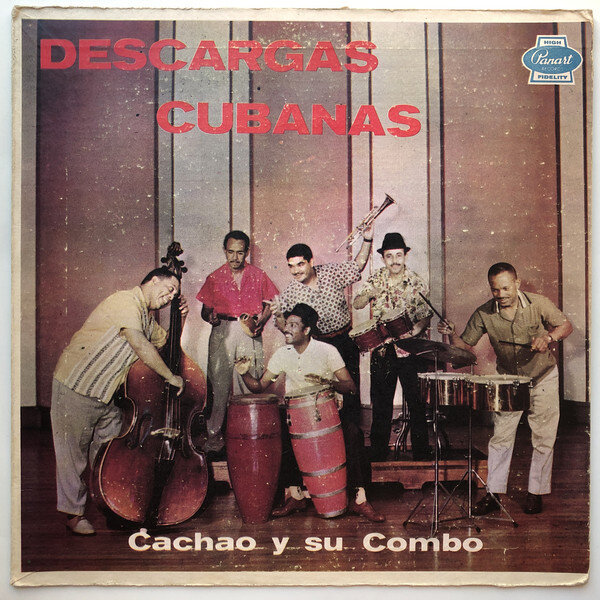

Un classique indémodable!




Brazil 70 - After Tropicalia New Directions In Brazilian Music In The 1970's
(Soul Jazz Records, 2007)
Brazil 70 follows Brazilian music in the aftermath of Tropicalia as the country’s dictatorship entered its most oppressive phase. Musicians and artists from the Tropicalia period of the late-60s such as Gilberto Gil, Caetano Veloso, Tom Ze, Rita Lee (Os Mutantes lead-singer) and Gal Costa entered a new phase mixing rock, funk, samba and soul alongside a wealth of like-minded new artists such as Novos Baianos, Raul Seixas, Nelson Angelo and Joyce and more.


This compilation reflects the unique fusions of Funk, Mbalax, Cuban Son & Mandigue guitar sounds that transformed Dakar into West Africa's most vibrant city.
Thanks to its history of outside influences, Senegal - the western point of Africa - had become a musical melting pot. Cuban and American sailors had brought Son Montuno from Cuba, Jazz from New Orleans and American soul tunes: sounds that were swiftly embraced and adopted by urban dance bands and intuitively merged with local music styles.
One band in particular excelled at this fusion. 1960 marks the formation of Star Band de Dakar, a milestone that left an indelible imprint on Dakar’s musical landscape. Indeed, the whole country was soon grooving to their intoxicating mixture of Afro Cuban rhythms and Wolof-language lyrics.
The 1970s brought a new generation of stellar bands; Le Sahel, Orchestre Laye Thiam, Number One de Dakar, Orchestra Baobab, Dieuf Dieul de Thies and Xalam1 who fused traditional Senegalese percussion instruments such Sabra, Tama and Bougarabou with organs and keyboards, giving birth to new hybrids. Merging the folkloric and the experimental, these sounds, embraced by the youth, took centre stage and gave the previously dominant Cuban music a run for its money.
The Jackson Five, James Brown, Tabou Combo (Haiti), Celia Cruz (Cuba) and an array of African stars like Tabu Ley Rochereau (Congo), Manu Dibango (Cameroon) and Bembeya Jazz (Guinée) joined in with the local scene, improvising jam sessions and bringing new flavours to a music scene that was always open to new inspirations and influences. Johnny Pacheco immortalised his passion for the city with a song called "Dakar, Punto Final".


70's Classic Latin Series : Recorded Live At Sing Sing (1972)


70's Classic Latin Series : Harlem River Drive (1971)


70's Classic Latin Series : Afro Temple (1973)


70's Classic Latin Series : Mongo's Way (1971)

:format(jpeg):mode_rgb():quality(90)/discogs-images/R-1432437-1555146306-6340.jpeg.jpg)
Un album original de 1974 d'une institution cubaine Los Van Van.
Afro-Cuban Funk 70's.